March 03, 2013
East Kilbride News
Whitehall claims 'rest on thin ice'
UK Government claims that an independent Scotland would inherit a share of the national debt, but not the UK's existing international treaties, rest "on very thin ice", according to a leading international lawyer.
Professor David Scheffer spoke out in a critique of a Westminster Government analysis paper on the implications of Scottish independence.
He challenges the "pyramid of presumptions" in the Whitehall report, arguing it does not take account of Scotland's history and national character.
The commentator also suggests ministers' analysis aims to make the legal implications of independence appear so "burdensome and traumatic" for Scotland and its people that "voters will decide it is not worth the effort and vote 'no' on the independence referendum".
Scottish Secretary Michael Moore unveiled the document setting out the UK Government's understanding of new legal analysis on the implications of independence last month.
It concluded that the the most likely outcome of a vote for Scottish independence would be the continuation of the UK as the existing state under international law - described by some as the "continuator theory" - and the creation of a new state of Scotland.
The document states: "The findings of the legal opinion show that as the continuing state, the United Kingdom's membership of international organisations (including the European Union [EU], the North Atlantic Treaty Organisation [Nato], the International Monetary Fund [IMF], the G8 and G20) and treaties would be largely unaffected by Scottish independence.By contrast, an independent Scottish state would be required to apply and/or negotiate to become a member of whichever international organisations it wished to join as a new state."
The report further said there would be an "expectation that an independent Scottish state would take on an equitable share of the UK's national debt".
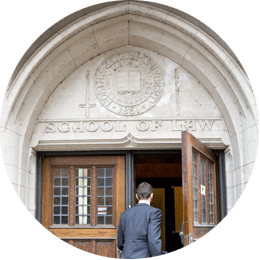
Prof Scheffer, director of the Centre for International Human Rights at Northwestern University School of Law in Chicago, challenged the UK Government stance.
In an opinion published on Deputy First Minister Nicola Sturgeon's blog, he said: "The Whitehall report's bold presumption that national liabilities would have to be negotiated and thus shared between Scotland and the rUK (remainder of the UK) under the continuator theory rests on very thin ice. On what legal basis would Scotland be obligated to assume any significant level of United Kingdom liabilities if the rUK is the continuator state? The Whitehall opinion offers no basis for establishing an obligation to share financial liabilities."